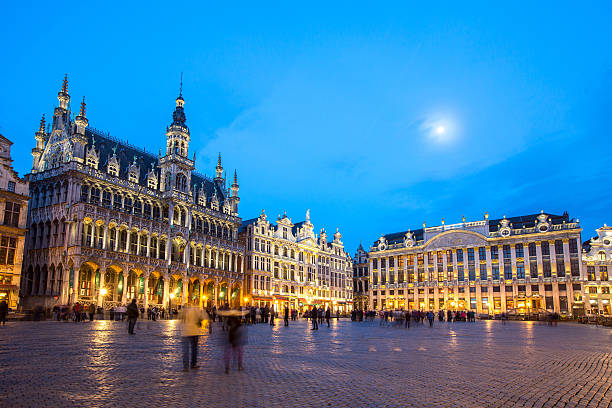
Often considered the most beautiful in the world, the reputation of the Grand-Place in Brussels is well established!
Even today, it retains a politico-administrative function by hosting the Brussels Town Hall, which remains the workplace of the mayor and most of the aldermen.
As a prestigious place, it hosts many festive events - concerts, fairs, folklore events, Christmas tree and nativity scene, sound and light, flower carpets in summer, etc. - or symbolic, such as eg. the reception of athletes following their performances.
Its history begins as a market place in the 12th century. Gradually, the square was filled with houses and markets, still mainly in wood. The splendid Gothic town hall was built in the 15th century in three phases; the same 15th century saw the installation of trade guilds in the houses bordering the Grand-Place. Even more than at present, the square is the nerve center of Brussels life: economically therefore, as already mentioned, with an intense sales activity (several halls devoted to the sale of bread - currently Maison du Roi or Broodhuis in Dutch -, meat, sheets, etc.), culturally (theatrical performances), judicially (with executions taking place in the square), and obviously in terms of local politics.
Subject to bombardment by Louis XIV's troops in 1695, it was almost entirely rebuilt on this occasion. It still undergoes major renovations and modifications during the following centuries, especially in the 19th century, to give it its current appearance.
The Grand-Place in Brussels has been on the UNESCO World Heritage List since 1998.